2026-11-03 · Jack Sullivan
Handling Frozen Pipe Bursts During Chicago Winters
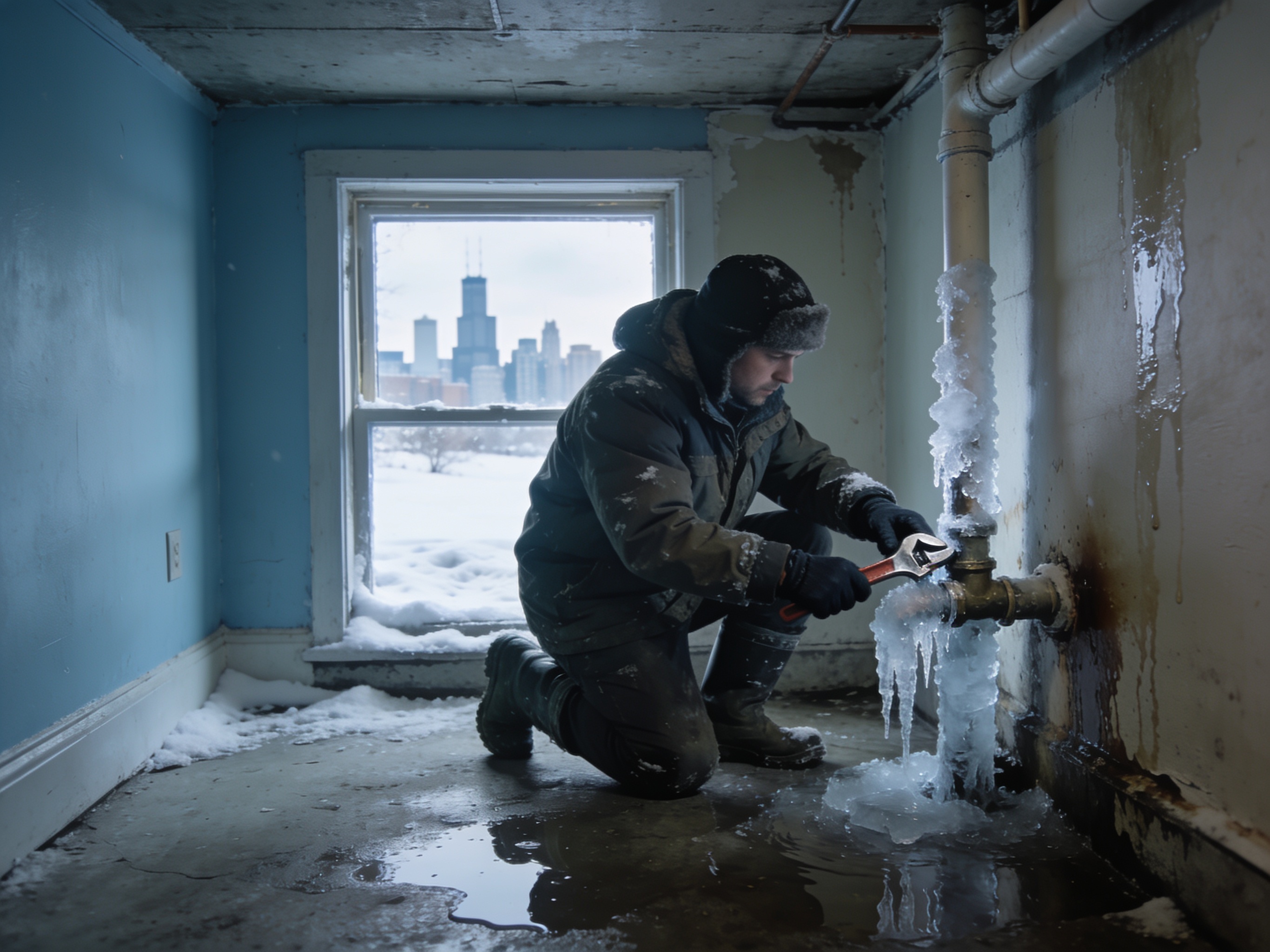
Chicago winters with their humid continental swings often push temperatures well below freezing, turning aging pipes in Lincoln Park, Wicker Park, and Lakeview homes into burst risks. Shut off the main water valve at the first sign of reduced flow, drain open faucets to relieve pressure, and contact a restoration team before ice melt causes widespread flooding in basements common to these neighborhoods.
Recognizing Frozen Pipe Signs in Chicago Housing Stock
Older single-family homes and multi-unit buildings in Wicker Park and Logan Square frequently feature galvanized or copper lines installed decades ago that expand and crack when water freezes. Watch for frost on exposed pipes near exterior walls, unexplained drops in water pressure, or strange hissing sounds from behind walls. In Hyde Park and Uptown, where many structures sit on slabs or have shallow crawl spaces, ice often forms first in supply lines running under unheated porches. Spotting these clues early limits the water volume released once temperatures rise above freezing along the Chicago Riverwalk corridor.
Immediate Actions After a Burst Occurs
After locating the shutoff, open all faucets on the affected floor to release remaining pressure and move furniture away from wet zones in South Loop or West Loop lofts. Avoid using household fans until a professional assesses electrical safety, especially in Bridgeport and Pilsen row houses where outdated wiring sits close to foundation walls. Document the water line with photos for insurance while keeping interior temperatures above 55 degrees to slow further freezing in nearby pipes. These steps reduce secondary damage to hardwood floors typical in Andersonville and Rogers Park properties.
Professional Water Damage Restoration Process
Technicians begin with moisture mapping using meters calibrated for Chicago's dense brick and plaster construction, then extract standing water before it migrates into joist cavities common in Navy Pier-adjacent buildings. Water Damage Restoration crews follow with industrial drying and antimicrobial treatment to address hidden saturation in insulation. For repairs to the original pipe failure, Water Damage Repair teams isolate the section, replace with PEX or copper rated for freeze-thaw cycles, and test the full system before restoring finishes. See typical project ranges in our guide to Typical Costs for Water Damage Restoration in Chicago.
Preventing Recurrence in Cold-Weather Conditions
Insulate pipes in unheated basements and attics with foam sleeves at least 1/2 inch thick, particularly in Evanston and Oak Park homes where wind off Lake Michigan accelerates heat loss. Install heat tape on vulnerable supply lines running along exterior walls and maintain a consistent 68-degree interior temperature even when away. Schedule annual inspections before December to catch corrosion in 40- to 60-year-old lines prevalent throughout Cook County. These measures cut emergency calls during January cold snaps that affect neighborhoods from Uptown to Bridgeport.