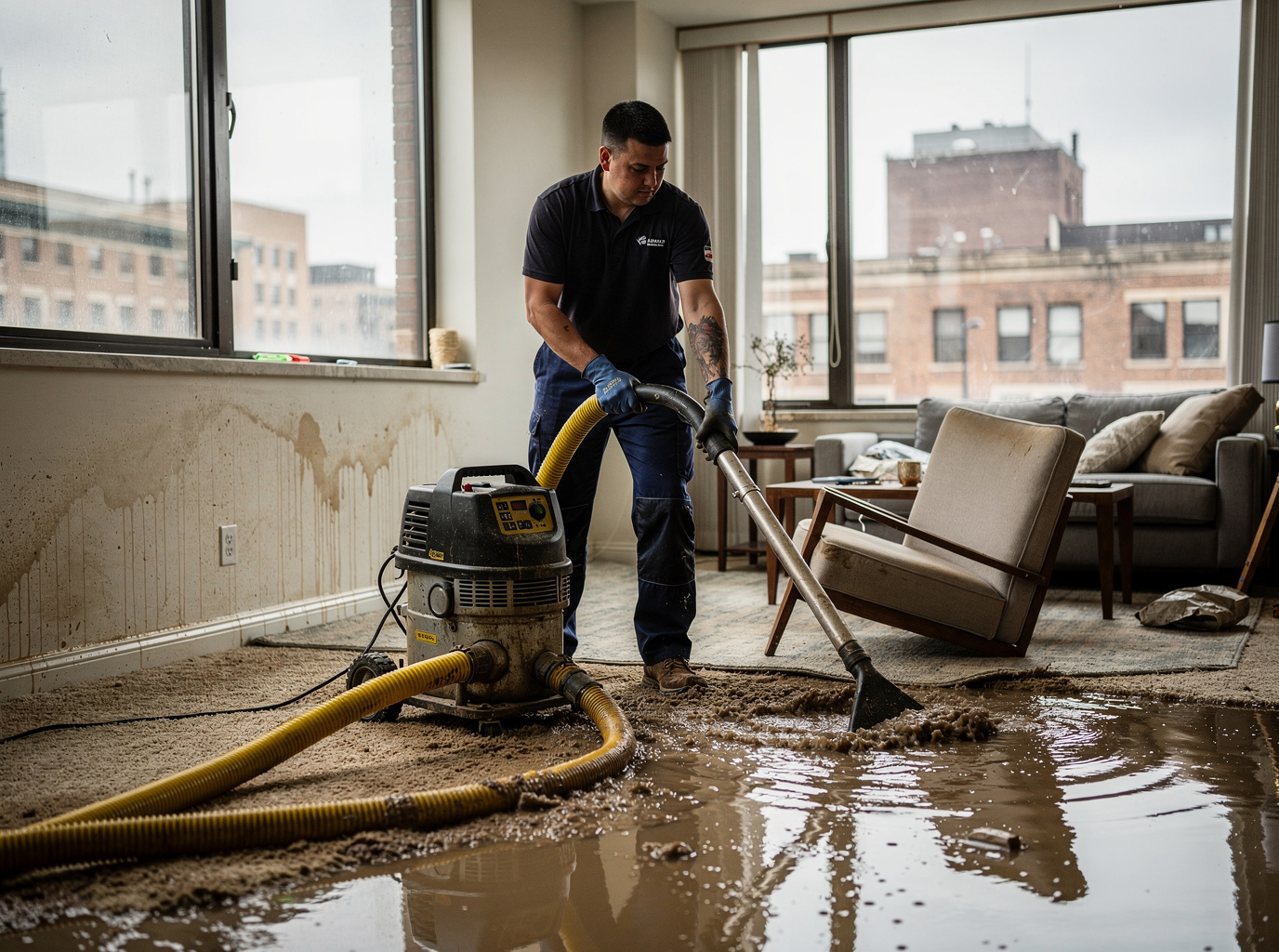
Chicago's older brick and frame homes in neighborhoods like Lincoln Park, Hyde Park and Logan Square often have plaster walls and finished basements that trap moisture after pipe bursts or heavy rain. Crews use moisture meters and thermal imaging to locate water that has wicked into lath or subfloors before mold sets in during the humid summer months. Extraction begins with submersible pumps on standing water followed by air movers and dehumidifiers sized for the square footage and construction type common in Cook County.
Winter freezes in Elmhurst and Oak Park send water lines through unheated crawl spaces, while summer thunderstorms overwhelm downspouts along the Chicago Riverwalk corridor. Technicians remove baseboards and drill weep holes in drywall to promote airflow, then monitor daily moisture readings until levels match unaffected materials. Failure to address hidden pockets behind tile in older bathrooms or under hardwood in Wicker Park leads to recurring issues months later.
Flood cuts are made at consistent heights based on water line evidence rather than guesswork, and all affected insulation is removed to meet local code expectations for habitable spaces. Equipment is placed to avoid tripping hazards in tight South Loop or Bridgeport layouts while running 24-hour drying cycles that account for the dense urban building stock.
Final verification includes checking adjacent rooms in multi-unit buildings common throughout Uptown and Andersonville to prevent cross-contamination, with written drying logs provided to homeowners and insurance adjusters.
Technician insight
In Chicago the thing that catches most people out with water damage cleanup is how quickly moisture travels up plaster walls in pre-1940 homes during a cold winter pipe burst; the dense brick construction and tight lot lines in places like Bridgeport mean you have to pull baseboards and open cavities the same day or you chase mold into the next unit.
Winter Pipe Burst in Lincoln Park
A second-floor supply line froze and burst overnight, sending water through two floors of a 1920s brick two-flat. Crews extracted standing water, removed baseboards, and ran drying equipment for four days while monitoring plaster walls. Daily readings confirmed the structure reached dry standard before any mold growth occurred.
Water Damage Cleanup Services We Offer
✓Emergency Water Extraction
Rapid removal of standing water from basements and first floors using truck-mounted pumps sized for Chicago rowhouse layouts.
✓Structural Drying and Dehumidification
Placement of commercial air movers and dehumidifiers to pull moisture from plaster, hardwood and masonry in older Cook County homes.
✓Moisture Mapping and Monitoring
Daily meter readings and thermal scans to track hidden water behind walls in Lincoln Park and Lakeview properties until dry.
✓Content Cleaning and Pack-Out
Safe removal, cleaning and storage of furniture, rugs and belongings from flooded rooms in Wicker Park and Logan Square residences.
✓Basement Water Cleanup
Targeted extraction and drying for finished basements common in Hyde Park and Rogers Park where water pools below grade.
Water Damage Cleanup Cost in Chicago, IL
| Service | Typical Range | What Affects It |
|---|---|---|
| Small area extraction and drying | $450–$900 | Single room or hallway under 200 sq ft |
| Basement drying | $1,200–$2,800 | Finished basement with hidden wall moisture |
| Multi-room pack-out and drying | $2,000–$4,500 | Two or more floors plus contents handling |
| Daily equipment rental extension | $150–$300 per day | Added days beyond initial three-day cycle |
Ranges are typical for Chicago, IL and confirmed with an exact written quote before any work starts.
How it works
- 1
Arrival And Safety Assessment
Technicians arrive from the Elmhurst base, shut off water sources if still active, and identify electrical hazards in the affected Chicago property.
- 2
Water Removal
Standing water is extracted with pumps and wands, then baseboards are removed to expose wall cavities for airflow.
- 3
Drying Setup
Air movers and dehumidifiers are positioned based on construction type and square footage, with daily moisture checks logged.
- 4
Final Verification
Readings are confirmed against unaffected materials and the site is cleared once levels meet industry dry standards.
Pricing
Pricing varies by water volume, affected square footage, and number of rooms requiring drying in multi-story Chicago buildings.